

+918048031534

Currently it only shows your basic business info. Start adding relevant business details such as description, images and products or services to gain your customers attention by using Boost 360 android app / iOS App / web portal.

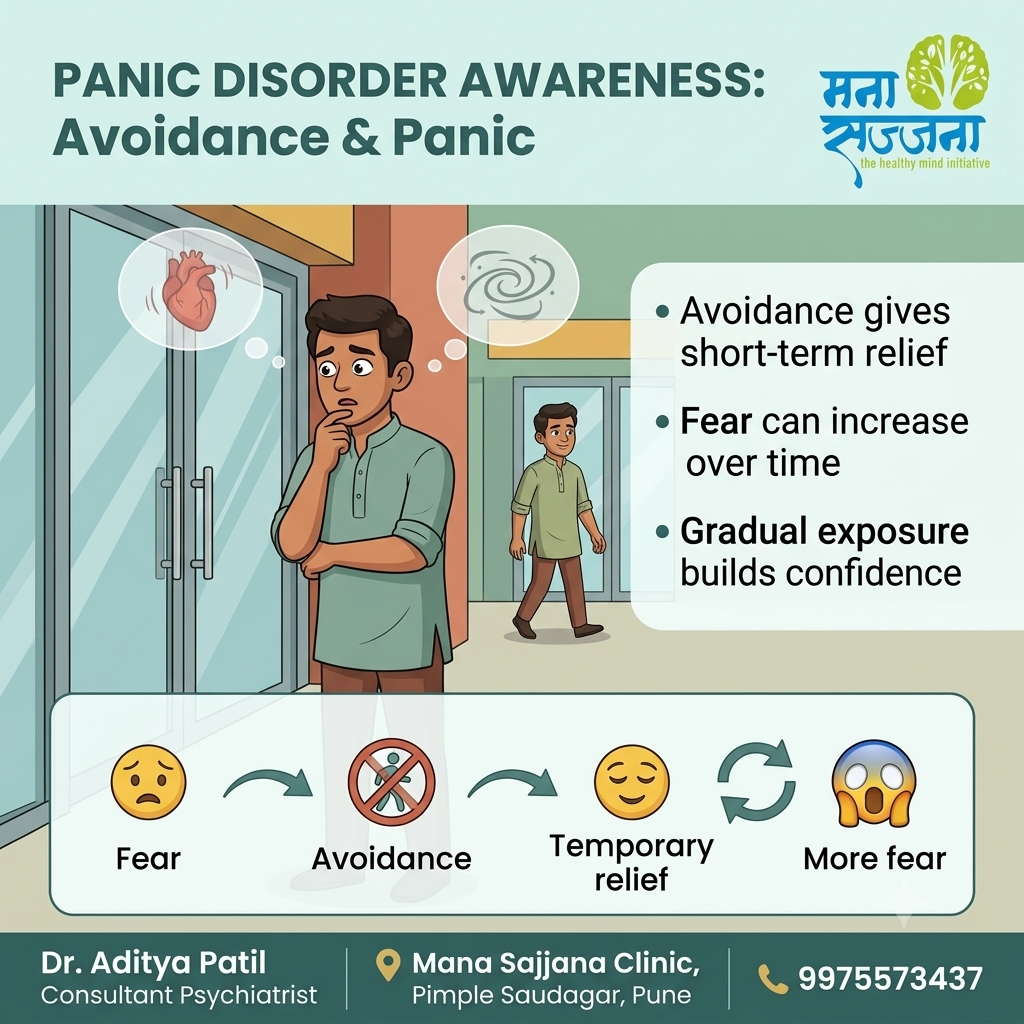
After experiencing a panic attack, many people begin avoiding places or situations where they fear another episode might occur. This is known as avoidance behaviour, and it is common in panic disorder and agoraphobia. People may avoid: * Travelling alone * Crowded places or shopping malls * Lifts or enclosed spaces * Public transport * Exercise because of a racing heartbeat * Being far from home or from someone they trust Although avoidance often reduces anxiety temporarily, it can unintentionally reinforce fear. The brain starts to associate these situations with danger, making future panic attacks seem even more likely. Over time, confidence decreases, daily activities become more restricted, and quality of life may be affected. Understanding the role of avoidance is an important part of learning how panic disorder and anxiety disorders are maintained. Evidence-based treatments, including Cognitive Behaviour Therapy (CBT), Exposure and Response Prevention (ERP) where appropriate, and gradual exposure techniques, can help people reduce avoidance, rebuild confidence, and return to activities they once feared. Dr. Aditya Patil Consultant Psychiatrist Mana Sajjana Clinic, Pimple Saudagar, Pune


