
+918048031534

Currently it only shows your basic business info. Start adding relevant business details such as description, images and products or services to gain your customers attention by using Boost 360 android app / iOS App / web portal.

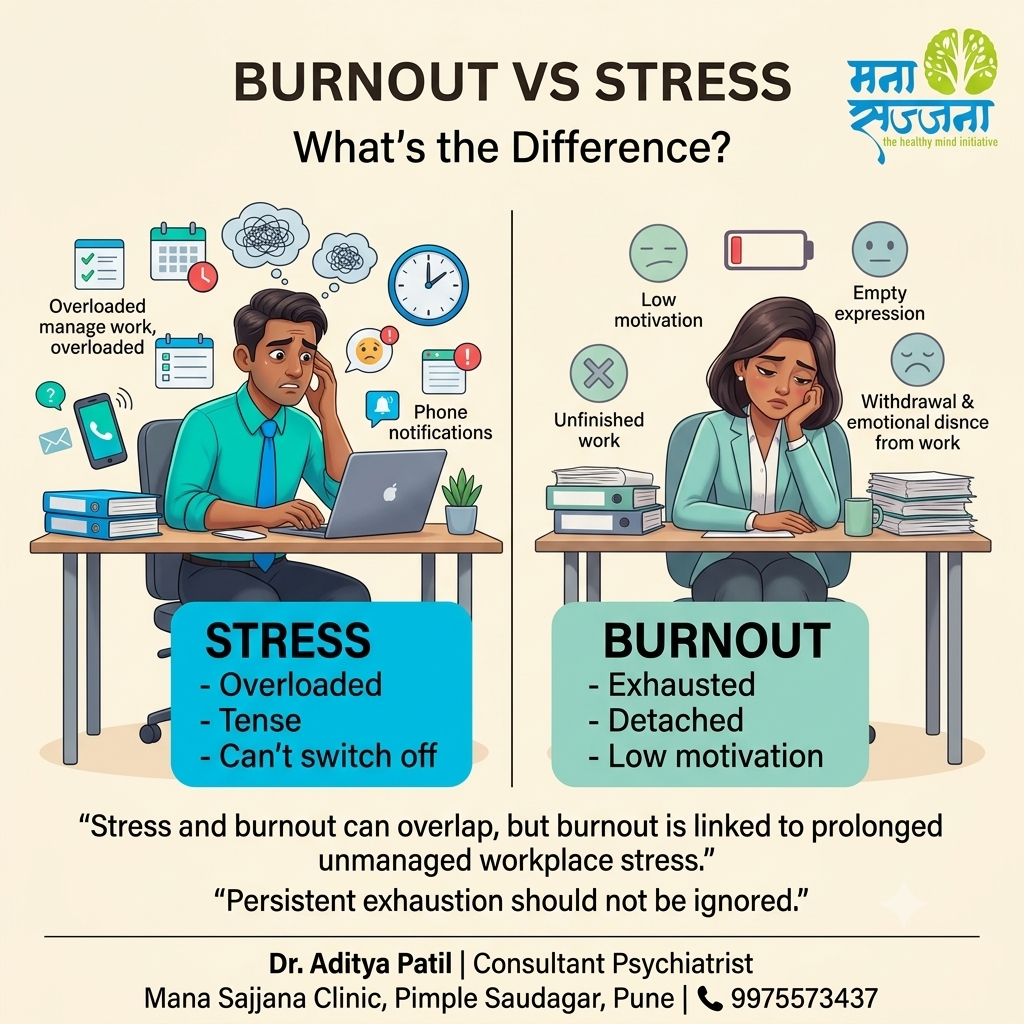
Feeling exhausted after a demanding week does not necessarily mean you are experiencing burnout. Stress often involves feeling that there is too much to manage. You may feel worried, tense, restless, irritable, or unable to switch off. Burnout, particularly in an occupational context, develops after prolonged workplace stress that has not been successfully managed. Signs associated with burnout may include: • Persistent physical or emotional exhaustion • Feeling mentally drained by work • Increasing negativity or detachment from your job • Reduced motivation • Difficulty concentrating • Feeling less effective or productive • Dreading the working day • Difficulty recovering even after time away from work Stress and burnout can overlap, but they are not the same. Burnout is specifically considered an occupational phenomenon, rather than simply another term for everyday stress. Addressing excessive workload, improving work-life boundaries, getting adequate rest, exercising, and seeking appropriate support can help with workplace stress management. Persistent exhaustion or loss of interest should also be assessed carefully, as similar symptoms can occur with depression, anxiety, sleep disorders, and physical health conditions. Recognising burnout symptoms and chronic stress early can help protect both mental health and professional functioning. Dr. Aditya Patil | Consultant Psychiatrist Mana Sajjana Clinic, Pimple Saudagar, Pune 9975573437


