

+918048031534

Currently it only shows your basic business info. Start adding relevant business details such as description, images and products or services to gain your customers attention by using Boost 360 android app / iOS App / web portal.

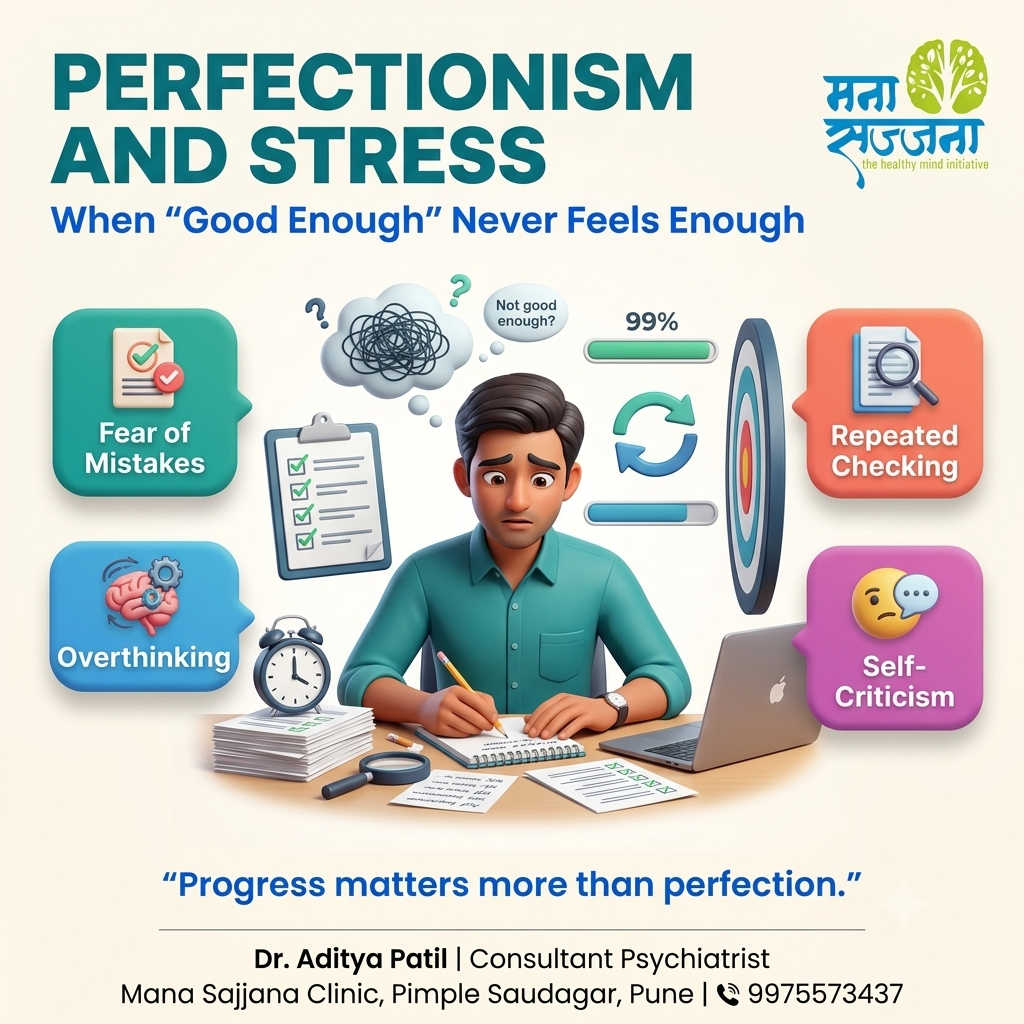
Wanting to do well can be healthy. But when you feel that everything must be perfect, even ordinary tasks can become a source of stress and anxiety. Perfectionism may look like: • Setting extremely high standards • Fear of making mistakes • Rechecking work repeatedly • Spending too much time on small details • Procrastinating because you fear doing something imperfectly • Difficulty accepting criticism • Comparing yourself constantly with others • Feeling dissatisfied despite doing well • Being overly self-critical Perfectionism can create a cycle: high expectations → fear of failure → overthinking or procrastination → increased stress → self-criticism. Over time, this pattern may contribute to chronic stress, anxiety, poor sleep, reduced productivity, and burnout. Try replacing “It must be perfect” with “It needs to be appropriate for the situation.” Setting realistic standards, accepting normal mistakes, limiting repeated checking, and focusing on progress rather than perfection can help with stress management. Healthy ambition encourages growth. Unhealthy perfectionism can make achievements feel inadequate and everyday life unnecessarily stressful. Recognising the connection between perfectionism, overthinking, anxiety, and stress is an important step towards healthier coping. Dr. Aditya Patil | Consultant Psychiatrist Mana Sajjana Clinic, Pimple Saudagar, Pune 9975573437


