

+918048031534

Currently it only shows your basic business info. Start adding relevant business details such as description, images and products or services to gain your customers attention by using Boost 360 android app / iOS App / web portal.

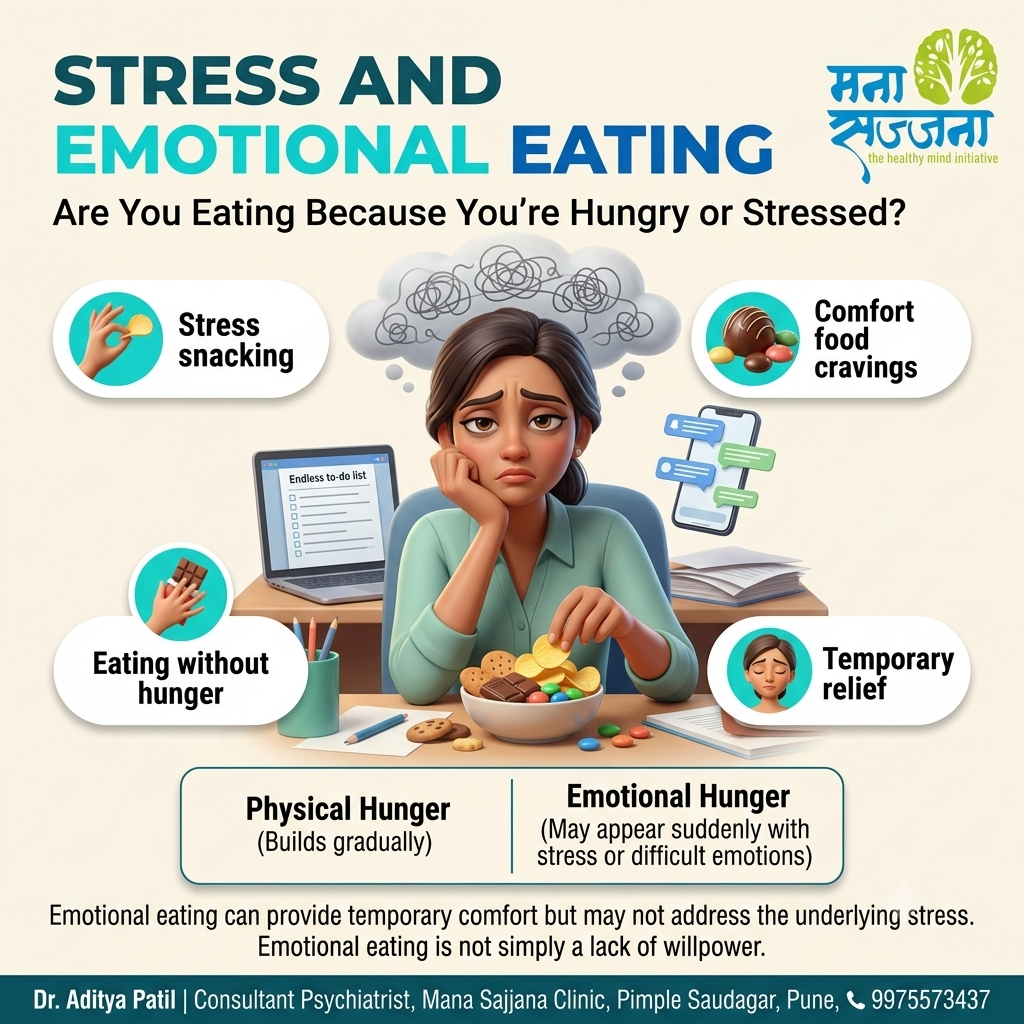
Have you noticed yourself reaching for snacks or comfort foods when you feel stressed, worried, bored, or emotionally overwhelmed? Stress and emotional eating are often connected. During stressful periods, changes in stress hormones, mood, sleep, and daily routines can influence appetite and food choices. Signs of emotional eating may include: • Eating without physical hunger • Craving sweets or high-calorie foods • Eating more when stressed or anxious • Snacking frequently while working • Eating quickly or automatically • Feeling temporarily better after eating • Feeling guilty after overeating Emotional eating is not simply a lack of willpower. Food can temporarily provide comfort or distraction, but it does not address the underlying source of stress. Regular meals, adequate sleep, physical activity, recognising emotional triggers, and developing alternative coping strategies can support stress management and healthier eating habits. Frequent binge eating, loss of control over eating, or significant distress around food may require professional assessment. Understanding the connection between stress, anxiety, emotional eating, and mental health is an important step towards healthier coping. Dr. Aditya Patil | Consultant Psychiatrist Mana Sajjana Clinic, Pimple Saudagar, Pune 9975573437


