

+918048031534

Currently it only shows your basic business info. Start adding relevant business details such as description, images and products or services to gain your customers attention by using Boost 360 android app / iOS App / web portal.

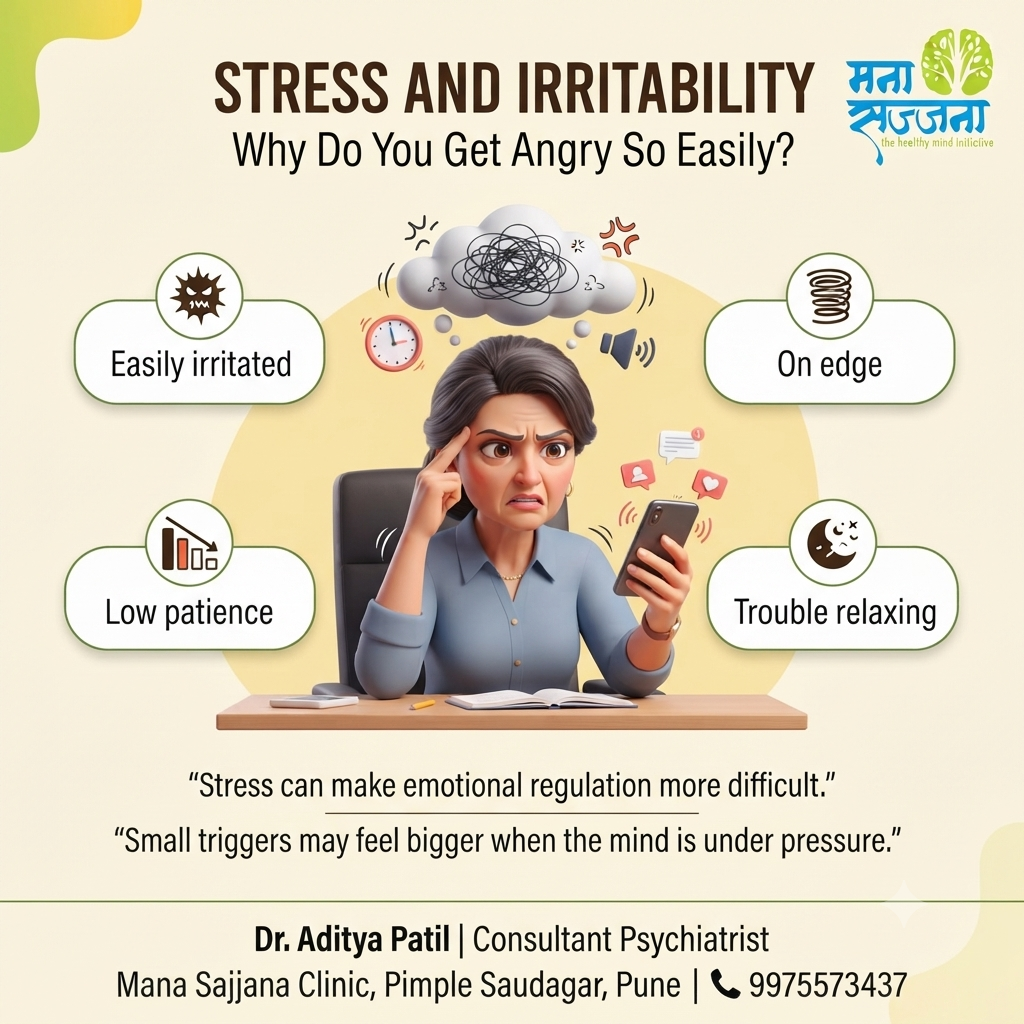
Have you noticed yourself becoming impatient, frustrated, or angry over small things when you are under pressure? Stress and irritability are closely connected. When the brain remains in a heightened state of alertness, even minor problems can feel more difficult to handle. Signs may include: • Losing patience easily • Getting irritated over small things • Snapping at family or colleagues • Feeling restless or constantly “on edge” • Becoming frustrated by delays • Feeling guilty after angry reactions • Difficulty relaxing • Reduced tolerance for noise or interruptions Occasional irritability is normal. However, chronic stress can make emotional regulation more difficult and may gradually affect relationships, work, sleep, and overall mental health. Managing stress through adequate sleep, regular physical activity, relaxation techniques, structured problem-solving, and identifying stress triggers can help reduce irritability. Persistent anger or irritability can also occur with anxiety, depression, sleep problems, and other mental health conditions, so it should not always be attributed to stress alone. Recognising the connection between stress, anger, and irritability is an important part of effective stress management. Dr. Aditya Patil | Consultant Psychiatrist Mana Sajjana Clinic, Pimple Saudagar, Pune 9975573437


