
+918048031534

Currently it only shows your basic business info. Start adding relevant business details such as description, images and products or services to gain your customers attention by using Boost 360 android app / iOS App / web portal.

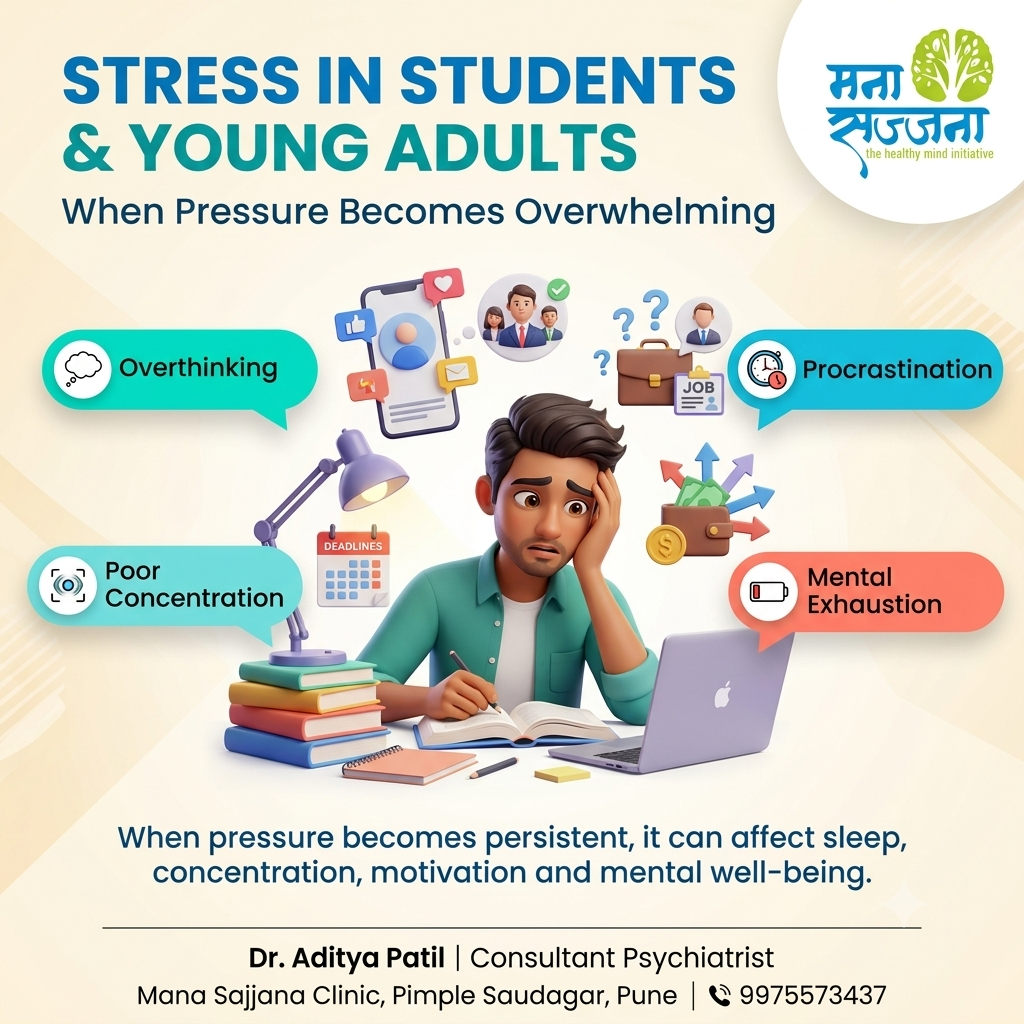
Exams, academic expectations, career uncertainty, relationships, finances, and social comparison can create significant stress in students and young adults. Some stress can motivate us to prepare and perform. But when pressure becomes persistent or overwhelming, it may begin affecting mental health and everyday functioning. Common signs include: • Excessive worrying about studies or career • Difficulty concentrating • Procrastination or avoiding tasks • Irritability and mood changes • Poor or irregular sleep • Headaches or physical tension • Feeling mentally exhausted • Loss of motivation • Social withdrawal • Feeling overwhelmed by small problems Constant comparison with friends or people on social media can further increase academic stress, anxiety, and self-doubt. Helpful stress management strategies include maintaining a realistic study schedule, breaking large tasks into smaller goals, exercising regularly, getting adequate sleep, taking planned breaks, and staying connected with supportive people. Persistent distress should not always be dismissed as “normal student stress.” Anxiety, depression, ADHD, sleep disorders, and other mental health difficulties can sometimes present with similar symptoms. Recognising excessive stress early can help young adults develop healthier coping strategies and protect their mental well-being. Dr. Aditya Patil | Consultant Psychiatrist Mana Sajjana Clinic, Pimple Saudagar, Pune 9975573437


