

+918048031534

Currently it only shows your basic business info. Start adding relevant business details such as description, images and products or services to gain your customers attention by using Boost 360 android app / iOS App / web portal.

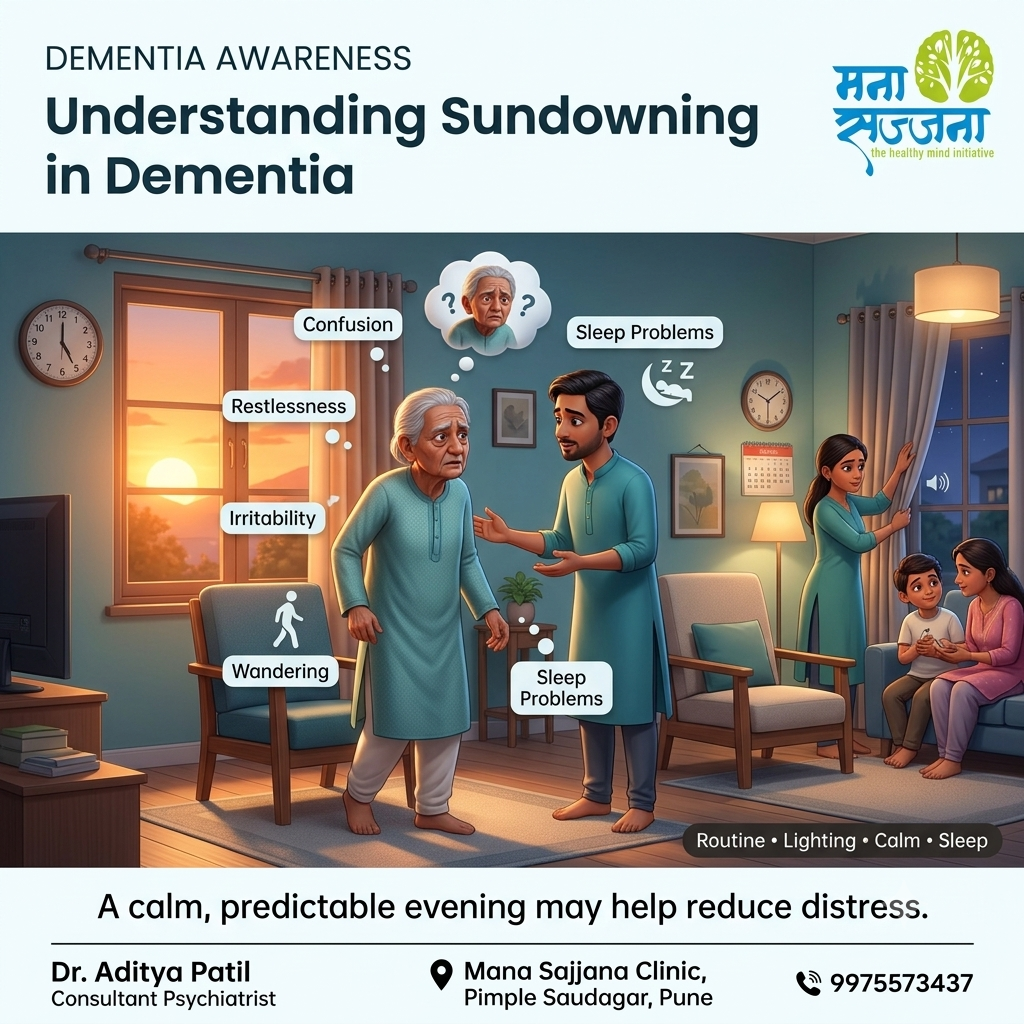
Some people with dementia become more confused, restless, anxious, or agitated during the late afternoon or evening. This pattern is commonly known as sundowning in dementia. Common signs may include: • Increased confusion in the evening • Restlessness or pacing • Irritability or agitation • Repeated questioning or calling out • Difficulty recognising surroundings • Increased wandering • Problems settling down for sleep The exact cause of sundowning is not always clear. Factors such as tiredness, disrupted sleep-wake cycles, reduced evening light, hunger, pain, overstimulation, or unfamiliar surroundings may contribute. Helpful strategies include maintaining a regular daily routine, encouraging daytime activity, providing adequate evening lighting, reducing noise and stimulation at night, and maintaining consistent sleep and meal timings. A sudden or severe increase in evening confusion in elderly people should not automatically be considered dementia. Infection, pain, dehydration, medication effects, or delirium may cause an abrupt change in behaviour or confusion. Understanding sundown syndrome can help caregivers identify possible triggers and create a calmer, safer evening environment. Dr. Aditya Patil Consultant Psychiatrist Mana Sajjana Clinic, Pimple Saudagar, Pune 9975573437


