

+918048031534

Currently it only shows your basic business info. Start adding relevant business details such as description, images and products or services to gain your customers attention by using Boost 360 android app / iOS App / web portal.

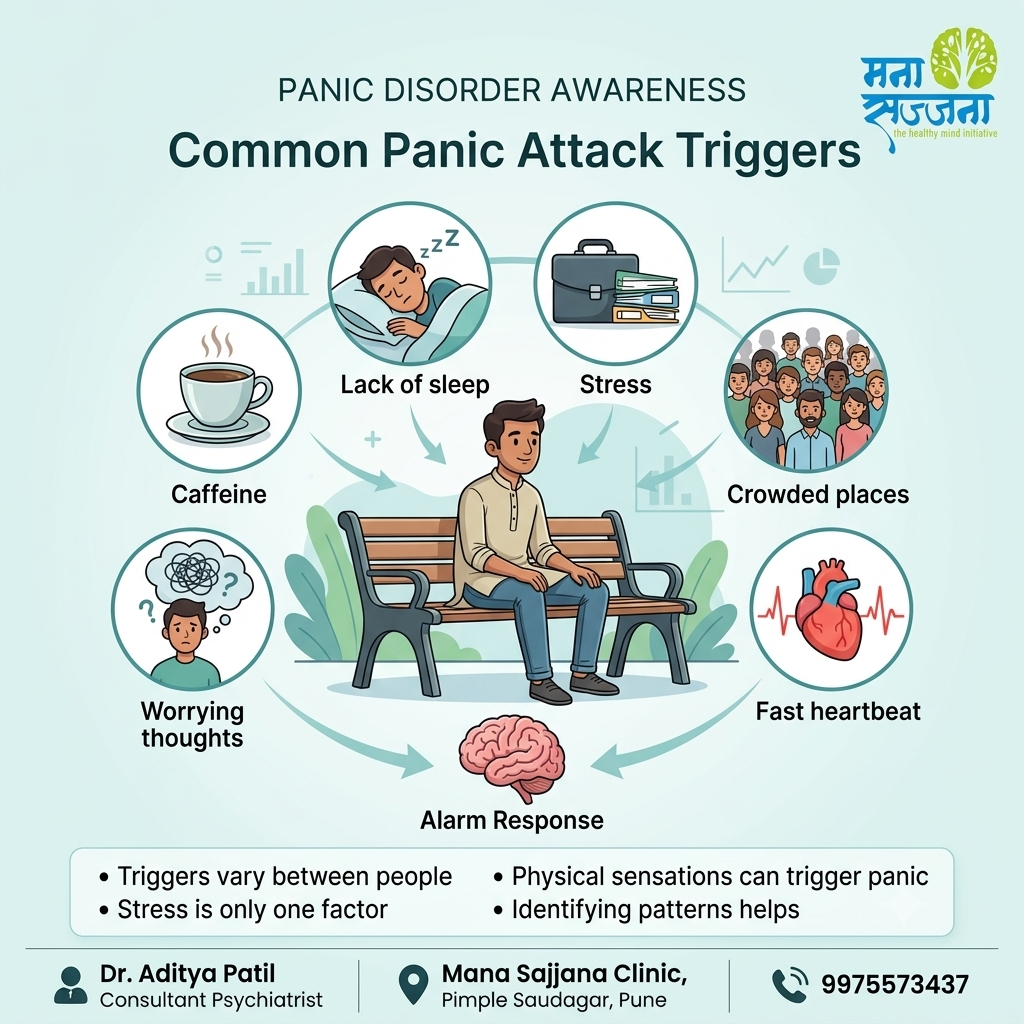
A panic attack can happen unexpectedly, and there is not always a single identifiable cause. While some episodes occur without warning, certain situations, physical sensations, and lifestyle factors may increase the likelihood of developing panic attack symptoms. Common panic attack triggers include: * Ongoing stress or chronic anxiety * Lack of sleep or poor sleep quality * Major life changes or emotional stress * Caffeine and other stimulants * Crowded or enclosed places * Previous frightening or traumatic experiences * Physical sensations such as a racing heartbeat, dizziness, chest tightness, or shortness of breath * Fear of having another panic attack (anticipatory anxiety) Triggers differ from person to person. Someone with panic disorder or another anxiety disorder may experience panic attacks in specific situations, while others may have episodes without any obvious trigger. Understanding what can trigger a panic attack helps improve awareness of panic disorder, anxiety symptoms, and the body’s fight-or-flight response. Learning to recognise common triggers and patterns can reduce misunderstanding and stigma surrounding anxiety disorders. Recovery is not simply about avoiding every trigger but about developing healthier responses to anxiety through appropriate assessment and evidence-based treatment. Dr. Aditya Patil Consultant Psychiatrist Mana Sajjana Clinic, Pimple Saudagar


